 中文版
中文版




releaseTime:2025-10-24 08:29:09source:Mu TiannumberOfPageViews:0
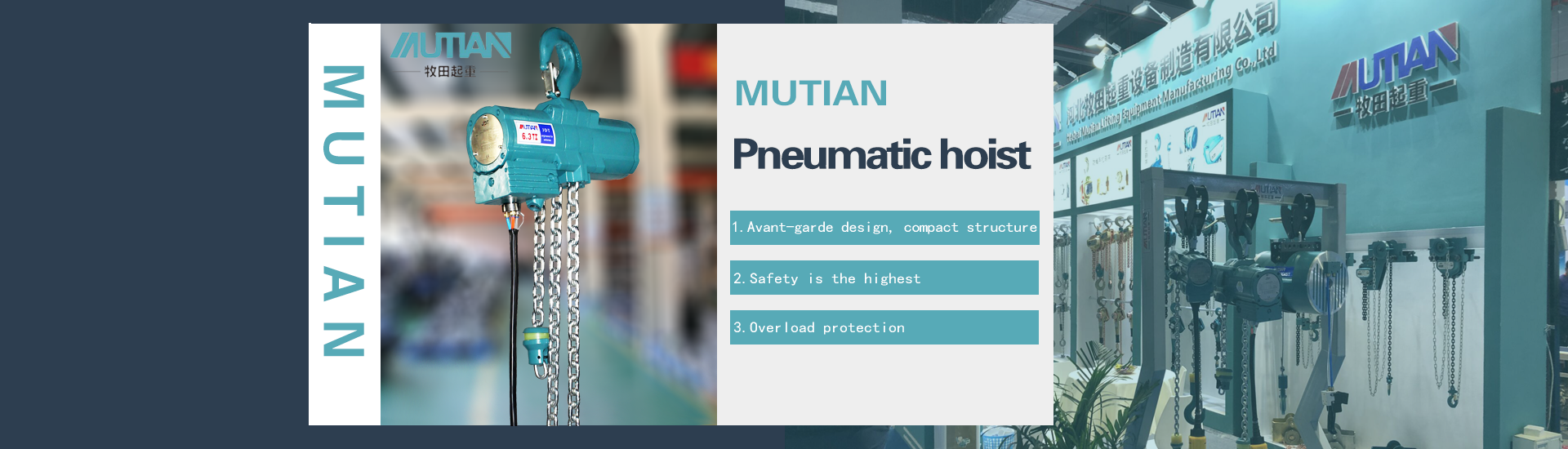
Maintenance and upkeep points for operating pneumatic hoists (pneumatic cranes)
1、 Operating standards and safety requirements
Pre-start check
Confirm that the installation ground is flat and solid, the pneumatic hoist is securely connected to the crane, and there is no air leakage.
Check the quality of compressed air, use an oil mist to purify lubricating air, and extend the service life of equipment.
Conduct a no-load test run to verify that all components (such as brakes and limit switches) are functioning properly.
operating principle
Slow start and slow stop: Avoid equipment damage caused by emergency stop and start.
Stable lifting: Maintain a stable connection between the hook and the object to prevent accidents caused by shaking.
Real time monitoring: Pay attention to abnormal sounds and vibrations during operation, and immediately shut down for inspection.
Taboo behavior
Overloading is strictly prohibited to avoid impact force.
It is forbidden for the hook to directly contact the sharp edges of objects, and it needs to be connected with a shackle.
Prevent the lifting chain from dragging diagonally with the steel edge and avoid cutting.
Insulation measures should be taken when using on high-temperature objects.
2、 Key points of maintenance and upkeep
routine maintenance
Cleaning: Regularly remove surface dust and oil stains to keep the equipment clean.
Lubrication: Regularly replace lubricating grease, with a focus on lubricating friction components such as chains and bearings.
Inspection: Conduct a brief visual inspection daily to confirm that there is no wear, looseness, or air leakage.
regular maintenance
Monthly inspection: Conduct in-depth checks on component wear and tear, and record equipment status.
Quarterly testing: Conduct service load testing to observe the functionality when lifting objects of different weights.
Half year testing: Ensure that the ability to lift heavy objects meets the standards.
Annual dismantling inspection: Disassemble, clean, and lubricate 1-2 times a year, with a focus on handling chain rust and debris accumulation.
Component replacement
Timely replace worn or damaged components (such as brake pads and sealing rings).
When the chain becomes twisted, stretched, or "stiff" (stiff), it needs to be replaced immediately.
3、 Storage and Preservation Requirements
Dry storage: Store in a dry place when not in use to avoid rusting caused by moisture.
Maintenance of steel wire rope: Clean the dirt on the steel wire rope before storage, apply lubricating oil, and then coil it for storage.
4、 Personnel and Training Requirements
Operation qualification: Operators need to undergo professional training and obtain a special equipment operator certificate.
Dedicated maintenance: Arrange personnel with professional knowledge to carry out maintenance and ensure maintenance efficiency.
Emergency plan: Develop emergency plans for equipment failures, heavy object falls, etc., and organize annual drills.
5、 Special environmental adaptation measures
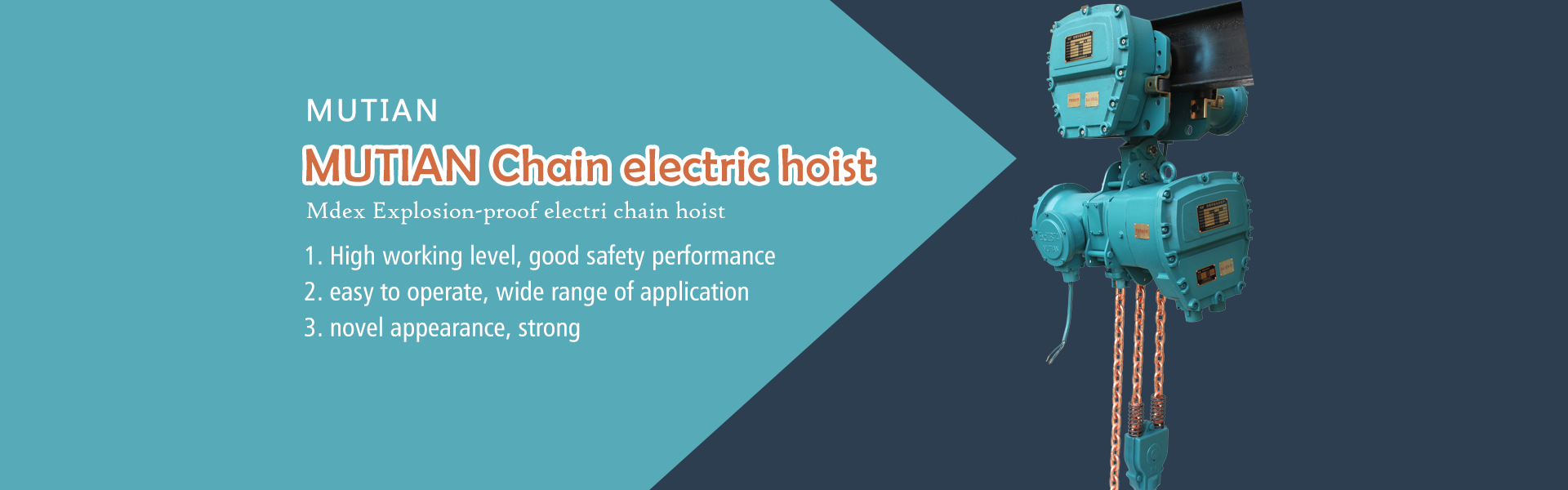
Flammable and explosive places: Use explosion-proof pneumatic hoists that comply with national explosion-proof standards (such as Ex d Ⅱ CT4).
High temperature environment: Select high-temperature resistant seals and configure preheating devices.
Corrosive environment: Stainless steel material or surface anti-corrosion treatment equipment is used.
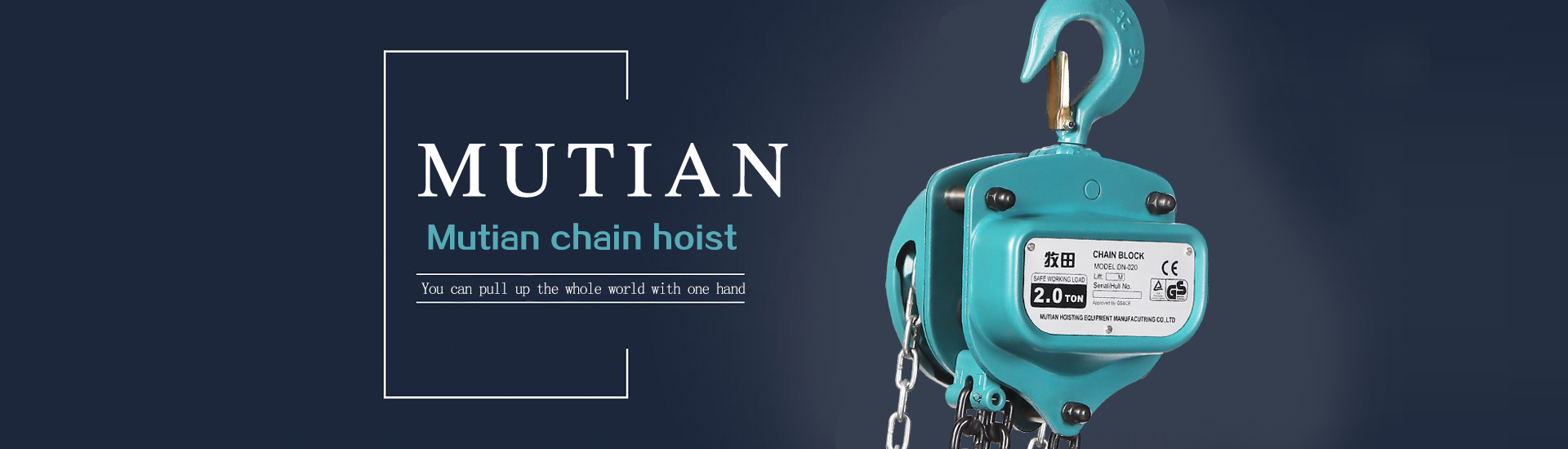
The main equipment produced by Hebei Makita: stage electric hoist, electric chian hoist, wire rope electric hoist,Hand chain hoist, lever hoist, pneumatic hoist and other lifting equipment
 phone
phone
 service
 message
 e-mail
